

ST. THOMAS AQUINAS AND THE POOR (and 3)
The so-called preferential option for the Poor, or simply, the option for the poor, is a constant teaching in Christian ethics and spirituality. With its ups and downs; in particular its praxis.
Based on the Sacred Scriptures and part of Christian Tradition, the priority of the poor as an essential chapter of theological and social ethics was particularly developed by the Fathers of the Church, especially by St. Basil, St. Ambrose and St. John Chrysostom. Also, by St. Augustine.
Among the ecumenical council – generally focused on doctrinal matters -, Vatican II, represents the highest point (cf. Gaudium et Spes).
The so-called social doctrine of the Church, the social encyclicals of the Popes, starting with Leo XIII’s Rerum Novarum, highlight the primary option of the poor – of laborers - as the priority of justice-love, of charity as love of neighbor.
Pope Leo XIV, in his first lengthy papal document, summaries creatively and develops further, the Christian option or love of the poor. This important and relevant Apostolic Exhortation is entitled Dilexi Te (I have loved you), and subtitled On the love towards the poor (October 4, 2025). It is the only papal document so far centered exclusively on the option, or preferential option, or love for the poor.
In numbers 63-67, Pope Leo XIV speaks of the mendicant orders, founded by St. Francis and St. Dominic, and highlights their members’ witnessing, then (13th century) of evangelical poverty. St. Thomas Aquinas, eminent witness of evangelical poverty, lived and taught the option of the poor - in other words.
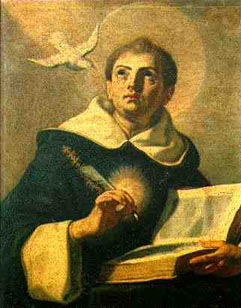
Among the classical theologians, Thomas Aquinas (1225-1274) stands out. He knows very well the teachings of the Sacred Scriptures and of all the Fathers of the Church. What is the relevant teaching of St. Thomas on the principal love of charity - the poor?
The Angelic Doctor writes: Jesus, “who possessed all, and through whom all things are, became poor, lest anyone, believing in him, would dare to boast of worldly riches.” Pure of heart and sober in eating and drinking. Thomas had a heart of a mother towards the poor. He loved poverty and was happy with his poor habit and poor pair of shoes. He was very humble as a student, a teacher and a member of the community. He turned down high ecclesiastical positions.
Charity is universal: loves all, and principally the poor and marginalized. Considering that the option involves mainly the virtues of justice and charity, let us look briefly on the corresponding teachings of St Thomas.
The Common Doctor studies justice as one of the four cardinal virtues (with prudence, fortitude and temperance). Justice is a good habit, a social virtue that inclines us to give to each person what is due to him or to her (cf. II-II, q. 58). What is due to the poor?
The most radical teaching of St. Thomas on the matter is his distinction between common and private property. Common property (community of goods) refers to the natural right of all to have a share in the goods created by God for all, while private property (individual appropriation) refers to the positive right of individuals to own something, but not only for their own use, but also for the use of others who are in real need.
Thomas asks himself: Can man possess external goods? Is it lawful for a person to possess goods as his own? Is it justifiable for a person-in-need to “steal”?
The Angelic Doctor answers: The possession of external goods is not natural to man with regard to their nature. Why? Because God is their principal owner. (cf. STh II-II, 666,1). With regard to their use and management, yes: man has natural dominion over external goods, over all creatures (cf. Gen 1, 26).
Is it legitimate for individual persons to possess anything as their own? No. Why? Because God created the goods of the earth for all (II-II, 66. 2). However, it is legitimate for man – and even. necessary – to have private property: he takes good care of his own things; human affairs are more efficiently organized if everyone has his own responsibility, and “men live together in greater peace when everyone is content with what is his. Then, the use (administration) of the goods of the earth belongs to man. [The problem: many do not have much, or have little or really nothing!]. Hence, “no man is entitled to have things merely for himself, but for all, so that he is ready to share with others in case of need” (limited ownership).
Therefore, common property (common use of goods) is by natural law, while private property (individual appropriation) is by positive law. The latter is not contrary to natural law, but an addition to it (II-II, 66, 2, ad 1). The Doctor of Divinity is in favour of private property, but not of a possessive privatizing property. (Thomas accompanied with the teachings on these matters with the Fathers of the Church).
A modern theologian comments: “Private ownership in the matter of the goods of the earth is only secondary and subordinate to common benefit: it exists only as a responsibility and a trust” (Mary O’Driscoll, OP). Like everyone else, the poor have a right to a share in the goods of the earth God created for all. The sharing of goods is a requirement of our faith.
Is theft justifiable in case of necessity? (II-II, 66, 7). Properly speaking, theft is not just, but a failure of justice, an injustice (cf. II-II, 66, 3 ad 3 1). The answer of St. Thomas to that question: in case of real necessity, everything is in common. In case of of “an evident and urgent need,” it is not theft.
A related question: What about “superfluous goods”? St. Thomas tells us that they belong to the poor: “The superfluous goods that some persons own are due by natural right to the sustainment of the poor” (II-II, 66, 7). All persons, and principally the rich, are obliged to give to the needy what they do not need, taking into account their state and situation in ife.
We find a clear echo of this radical teaching in the Catechism of the Catholic Church (1992, 1997): The poor in real need may take from the squandering and selfish and over-consuming rich. This taking from them is not really “theft.” Why? “Because the natural order created by God demands that the use of goods is for all” (CCC, 2408). In a similar context, Pope Leo XIV questions us: Are you ready to share the goods of the earth, which belong to all, in a just and equitable manner? (In Unitate Fidei – November 2, 2025 - no. 10).
St. Thomas on laws, justice and charity. On their proper relationships.
Laws and Justice: Laws respect justice. Human laws ought to be just laws. Unjust laws are not binding and should not be obeyed. If disobeying a law would be a greater evil, then, should not be disobeyed
Justice and Charity: Justice as mediation of Charity or Love: “All things issue from charity as from a principle, and all things are ordered towards charity as to an end.” No charity without justice.
Charity and mercy. St. Thomas’ words: “Justice without mercy is cruelty; mercy without justice is stupidity.” St. Thomas Aquinas writes: The noblest deeds are the works of mercy, “even more than our acts of worship”; “Mercy is the beating heart of the Gospel” (Pope Francis, GE, 106 and 97). Almsgiving is an act of merciful charity. Almsgiving as an addition to justice.
Love of the needy neighbor is the priority, the distinguishing characteristic of all the followers of Jesus, “the great criterion” of holiness also today. It is Christ’s call to all Christians and people of good will: “I was hungry and you gave me food…” (cf. Mt 25:35-36).
St. Thomas’ teachings on justice, property and the poor influenced much the theologians of Salamanca (16th Century), particularly Francisco de Vitoria, the missionaries in Latin America, headed by Bartolomé de las Casas, and in our time Gustavo Gutierrez of the Theology of Liberation (20th-2firs centuries). Also, the Angelic Doctor has inspired the social doctrine of the Church and papal social encyclicals.
“God intended the earth and all that it contains for the use of every human being and people… (T)he right to have a share of earthly goods for oneself and one’s family belongs to everyone” (GS, 69. Cf. GS, 34; St. Paul VI, PP, 22-24; St. John Paul II, LE, 14, SRS 31 and 42; Benedict XVI, Deus Caritas Est; Pope Francis, Gaudete et Exultate; Pope Leo XIV, Dilexi Te). Cf. St. Thomas Aquinas, STh II-II, 32, 5 ad 2; STh,66, aa. 2 and 7)
In our individualistic and cold world, Thomas Aquinas continues to be light for our hopeful journey to full life.
AND TO CLOSE. Thomas’ Charitable Justice is a call to a simple life-style (no to wasting and squandering), poverty in spirit, and sharing: “Let us live simply so that others may simply live” (FGB)