

LENTEN MEDITATIONS
III: CONVERSION FROM SIN
FAUSTO GOMEZ OP
THE JOURNEY OF LENT is a pilgrimage of conversion by the path of penance and reconciliation. In a nutshell, conversion means renouncing sin and returning to God.
We live in a secular, individualistic and consumerist world where sin is generally denied. There is a clear loss of the sense of sin and, more radically, loss of God. But sin continues to be present today, and apparently keeps multiplying.
From the beginning of human history, sin is a dark reality. The disobedience of our first parents (cf. Gen 3:12): original sin corrupted our human nature (cf. St. Thomas, STh I-II, 109, 2). Later on, we find the killing of Abel by his brother Cain (Gen 4:1-18). And thereafter, many sins as narrated in Sacred Scripture. And the race of Cain continues unabated - today.
There is sin in our world. And there is sin in our hearts. Jesus of Nazareth said it well to those who wanted to stone a woman caught in adultery: “If there is one of you who has not sinned, let him be the first to throw a stone at her” (Jn 8:7). Nobody did. We are all sick in need of a physician, a savior: Jesus, the Son of God made man.
The Sacred Scripture speaks often of sin to call to repentance. The dignity of man and the indignity of sin: sin debases man and impedes him to achieve his/her own human fullness. By sinning, man abused his freedom, disrupted his proper relationship with God and became, moreover, out of harmony with himself, with others, and with all created things (GS, 13; CCC, 1846-1869). Jesus came to call sinners to repentance - to love (cf. Mt 9:13).
SIN AND SINS
To be converted means to renounce sin (cf. Mk 1:15).
What is sin? Sin is a moral evil, a bad human act, a failure in self-realization, undue attachment to things: conversion to creatures and aversion towards God. It is rejection of God, and also rejection of the human person. Vatican II tells us that “it is not possible to despise man without despising at the same time, God” (GS, 27, 29, 80). Sin is against human nature, while virtue is according to nature. Sin also diminishes our inclination to virtue, which is a good habit that gives us happiness.
Sin is darkness, night. Commenting on Judas’s betrayal of Jesus at night, St. Augustine comments: Judas himself was night because the sinner carries the night within himself. Moreover, sins may make as like slaves (Rom 7:14). As Jesus sys: “Everyone who commits a sin is a slave of sin” (Jn 8:34). Sin is a bad use of freedom. St. Augustine tells us in his Confessions that when he was in sin – when as a young man lived a loose life –, he had “the freedom of a run-away slave.” Truly, every sin is a betrayal of love – like the sin of the prodigal son. Bernanos defines hell in his wonderful Diary of a Country Priest that “hell is not to love anymore.
Sin is an evil, and evil can never be or become good (cf. CCC 312). It may become an occasion for good. Point to remember: “From the sin of Adam and Eve, sin presents itself as promise, but it is no more than an illusion and a lie” (A. Peteiro).
There are different kinds of sins: against God, against ourselves, against our neighbor, and against creation; sins in thought, word and deed; sins by commission (doing something evil) and sins by omission (not doing good). Furthermore, there are sins that cry to heaven (cf. GS 27; CCC 1867).
Not all the sins are equally grave. Jesus said to Pilate: “The one who handed me over to you has the greater guilt” (Jn 19:11). Christian tradition speaks of venial or light sin and mortal or grave sins. Mortal sin is spiritual death: the loss of divine grace and of love as charity. (Mortal sin: there is grave matter, full advertence, and full consent. There are also circumstances that may influence the gravity of sin – or diminish it). Venial sins weaken charity and our resolve to follow Jesus and love him intensely, and may lead to the commission of mortal sins. (Cf. St. John Paul II, RP, 17).
The definition of sin is applicable formally to mortal or grave sins, that is, sins which cut off our graceful and loving relationship with God, with one another, and with creation.
A well-known distinction of sins is the one referring to the seven capital sins (ordinary sins that often become habitual in many of us; they are heads of other sins). In this context, a most meaningful biblical text: All that is in the world is the lust of the flesh, and the lust of the eyes, and the pride of life (1 Jn 2:16). Lust of the flesh: gluttony and lust. Lust of the eyes: Avarice or greed. Pride of life: vainglory, spiritual laziness, envy and anger. Pride is the king of all capital sins. The seven capital sins easily move the appetite to pursue (“apparent”) good in an inordinate manner (vainglory, gluttony, lust, avarice), or to flee from doing (true) good by reason of the “evil” (difficulty, a cross, sacrifice) attached to it (spiritual laziness, envy, anger).
Some Fathers of the Dessert and of the Church speak of an eighth capital sin: sadness. An interesting point to be taken into consideration: sadness denotes, perhaps, lack of faith in the infinite mercy of the good Lord, and of hope in the glory to come.
Our sins have a personal and a social dimension for we are individuals and social beings. In truth, all our sins affect negatively ourhuman and Christian communities: “There is no sin in thought, word or deed, no matter how personal or secret, that does not inflict injury upon the whole fellowship” (Bonhoeffer).
Vatican II speaks of sins that are infamies and cry to heaven: Any type of murder, genocide, abortion, euthanasia, wilful self-destruction, what violates the integrity of the human person, whatever insults human dignity, such as subhuman living conditions, arbitrary imprisonment, deportation, slavery, prostitution, the selling of women and children, as well as disgraceful working conditions (Vatican II, GS 27; cf. CCC, 1867).
Other social sins are: oppressive social structures, situations that promote selfishness, such as tax evasion, unbridle consumerism; also, sinful invitations to cooperate in the sins of others like graft and corruption.
CAUSES AND EFFECTS OF SINS
Sin is bad company. An obstacle to happiness. We firmly wish not to sin. Hence, we need to know its causes and effects.
The direct cause of our sins is ourselves: the abuse of our freedom, which is properly speaking the power to do good, not evil. Inordinate love of self - the fat ego - as primary love, is the radical case of our sins. We may say, with St. Thomas Aquinas, that the inordinate love of self is the cause of all sins (cf. STh, I-II, 77, 4).
We Christians believe in the existence of the devil, from the beginning of the history of sin (he tempted Adam and Eve). The devil may be an indirect cause of our sins by inviting us constantly to do evil. He is he tempter (cf. Mt 4:3). The other two tempters: the world (false values) and the flesh (the uncontrolled passions).
God cannot be the cause of sin in any way: He is infinite goodness, boundless love. He permits our sins: God may permit sin and draw good out of it (cf. I-II, 79, 4). He respects our freedom - his gift. He does not leave man; man leaves him (cf. STh II-II, 24, 10). God does not want the death of the sinner, but salvation, true life (cf. Ez 33:11; Mt 18:15-35).
Sins have built-in bad effects. They cause in our life disharmony, disruption, division - unhappiness. St. Thomas says that sins make people old. Mortal sin causes spiritual death.
Other people may cooperate in our sins and vice versa. Beware of cooperating in the sins of others and of giving scandal to the little ones, that is, the children, those who are like children and the poor (cf. Mt 18:6). Hence, no to cooperation with the sins of others, but prudent fraternal correction and prayer.
How do we get rid of sin? By the path of conversion to God, to love – to Christ. Jesus Christ is our Savior: “the one who came to take away the sins of the world” (Jn1:29).
Repentance from sin, reconciliation with God, peace within our own self and with others, hharmony with creation make the world new every day. St. Thomas says that to ask for pardon truly is an authentic resurrection.
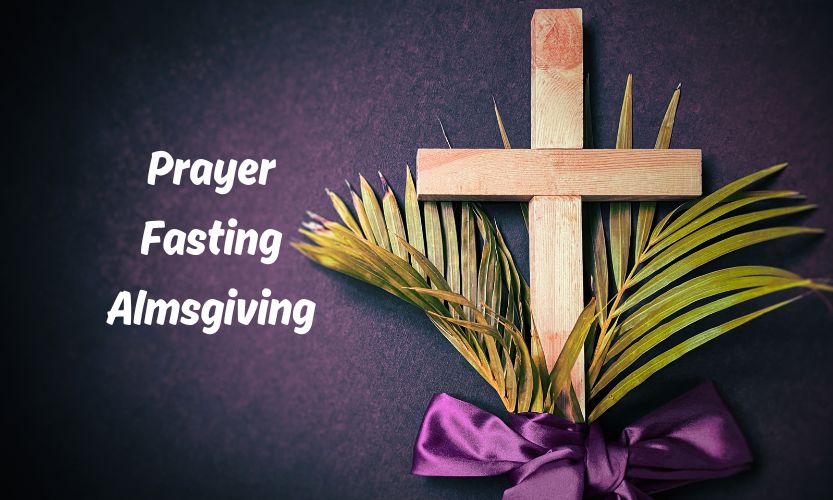
Not recommended: fighting directly our sins (the devil usually wins). Flee from temptations. Highly recommended: practicing virtue, doing good deeds - loving. God’s help is always there for us. Prayer always helps: humble prayer leads us to fasting, and fasting to almsgiving and forgiveness. Underlining fasting not just as abstaining from food but mainly abstaining from sins and vices. Pope Leo XIV stresses in particular fasting to “disarm our language – our hurting words”.
AND TO CONCLUDE. Let us remember that God’s mercy is infinitely greater than all our sins. He forgives our sins, our grave sins when truly sorry for them; when we humbly confess them (necessary for mortal sins). And, then, we do not remember much our sins: not good to play with dirt; God has forgiven and forgotten them: only today is in our hands – today to love. We do remember above all God’s infinite mercy: “For the saints, when they remember their sins, do not remember the sins but the mercy of God, and therefore even past evil is turned by them into a present cause of joy and serves to glorify God” (Thomas Merton, The Seven Storey Mountain).(FGB)